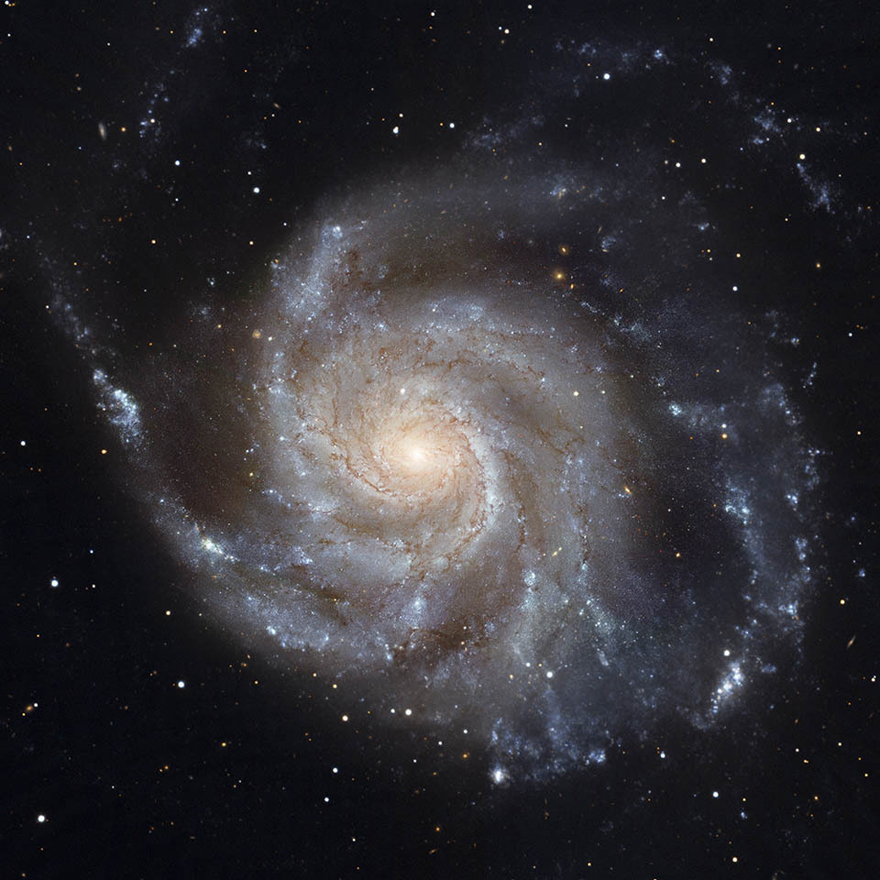
The Hidden Forces: Exploring Dark Matter and Dark Energy
Dark matter and dark energy are two of the most enigmatic components of our universe, collectively accounting for about 95% of its total mass-energy content. While dark matter is believed to be a form of matter that does not emit or absorb light, making it invisible and detectable only through its gravitational effects, dark energy refers to the mysterious force driving the accelerated expansion of the universe. Scientists have long sought to understand these hidden forces, as they hold the key to unraveling some of the deepest mysteries of cosmology. Research in these fields not only challenges our understanding of physics but also opens up exciting possibilities regarding the fundamental nature of reality.
This intriguing duality between dark matter and dark energy presents a fascinating puzzle for researchers. For instance, while dark matter plays a crucial role in forming galaxies and structures in the universe, dark energy opposes this gravitational pull, causing galaxies to move away from each other at an ever-increasing rate. To grasp these concepts fully, one must delve into the realms of astrophysics and quantum mechanics, exploring phenomena such as wormholes, black holes, and the Cosmic Microwave Background radiation. As studies continue and new technologies emerge, we edge closer to uncovering the behaviors and properties of these elusive forces, potentially reshaping our perception of the universe itself.
Counter-Strike is a popular multiplayer first-person shooter game that has captivated players worldwide since its release. Players join either the terrorist or counter-terrorist team and engage in a variety of game modes that require strategy, teamwork, and quick reflexes. If you're looking to enhance your gaming experience, check out the Top 10 Samsung Galaxy Ultra Accessories for some great gear that can help elevate your performance.
Are We Alone? The Search for Extraterrestrial Life
The question Are we alone? tantalizes both scientists and enthusiasts alike as we look to the stars. The search for extraterrestrial life has progressed significantly with advancements in technology and our understanding of the cosmos. From the early days of radio signals to the latest exoplanet discoveries, the hunt for intelligent life beyond Earth has never been more fervent. Projects like the SETI (Search for Extraterrestrial Intelligence) and the advances in telescope technology—such as the James Webb Space Telescope—allow astronomers to explore distant worlds and identify potentially habitable environments.
Moreover, the discovery of extremophiles, organisms that thrive in extreme environments on Earth, suggests that life could exist in conditions once thought inhospitable. Scientists estimate that there could be as many as 100 billion planets in our galaxy alone, many residing in the 'Goldilocks zone' where conditions might be just right for life. As we continue our quest to answer the profound question, Are we alone?, every new finding pushes the boundaries of our understanding and fuels our imagination about the possibilities of extraterrestrial civilizations existing among the stars.
Unraveling Cosmic Mysteries: The Life Cycle of Stars
Unraveling Cosmic Mysteries: The life cycle of stars is a fascinating journey that captivates both astronomers and stargazers alike. Each star begins its life in a nebula, a vast cloud of gas and dust, where gravitational forces pull particles together, igniting nuclear fusion at its core. This transformation marks the birth of a new star, classified into various categories such as main-sequence stars, red giants, and white dwarfs based on their size and evolutionary stage. With millions of years of life ahead, stars emit light and heat, enriching the universe while influencing the formation of planets and potentially harboring life.
As stars age, they undergo significant changes, leading to dramatic fates. A typical star like our Sun will eventually become a red giant, expanding to consume nearby planets before shedding its outer layers and leaving behind a dense core known as a white dwarf. In contrast, more massive stars may end their lives in spectacular supernova explosions, scattering elements across the cosmos and forming neutron stars or black holes. This cycle of birth, evolution, and death not only enriches the universe but also provides clues about the fundamental processes that govern the cosmos. Understanding the life cycle of stars is crucial for unraveling the mysteries of the universe, revealing the interconnectedness of all celestial bodies.